
The rebuild process
Each stage of the work is documented to create a 12-page internal record. This is the sequence an engine follows from arrival to handover, and why the price is agreed part-way through rather than at the start.
Cosmetic check and first assessment
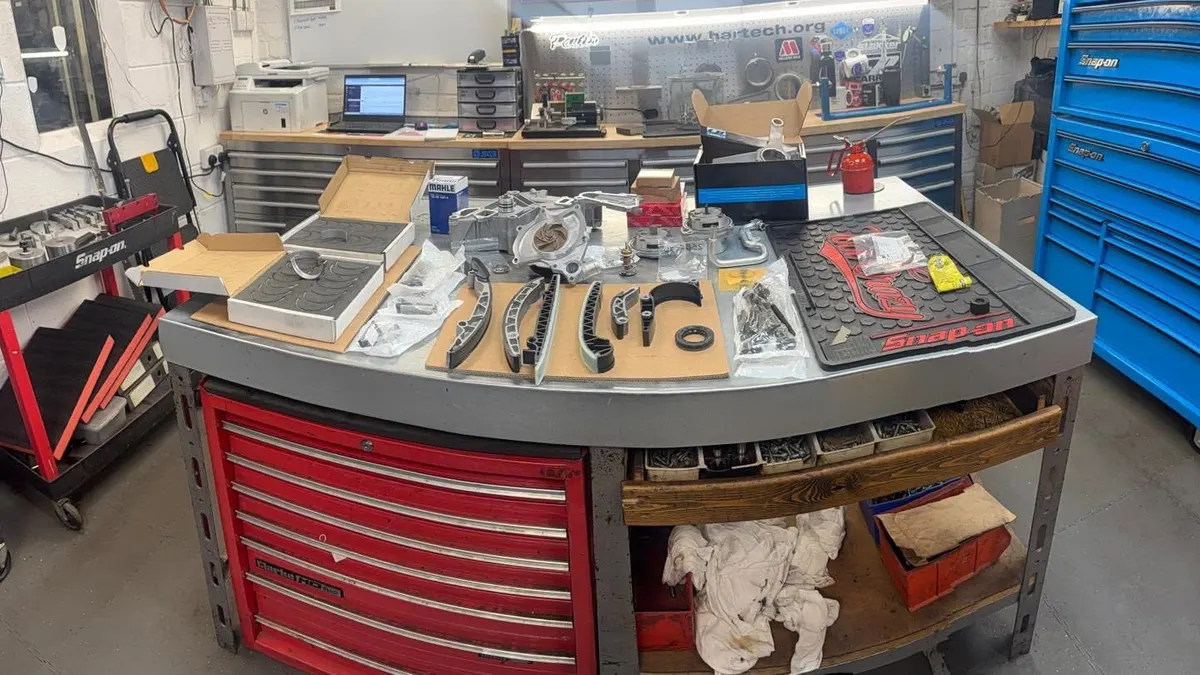
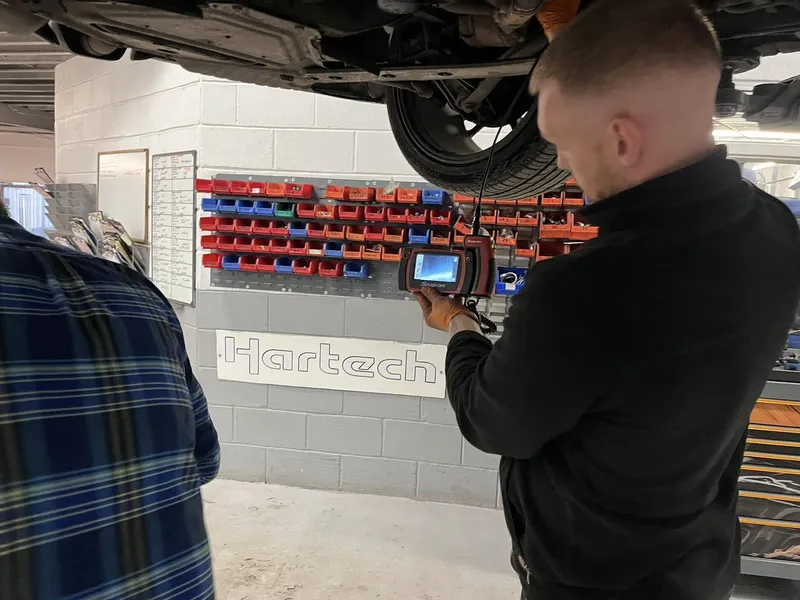
After an initial cosmetic check of the car we carry out a first assessment to satisfy ourselves that there is an internal engine fault and that a rebuild is necessary. Over the years several cars have arrived for rebuilds where we found early on that the fault lay elsewhere, saving the customer considerable unnecessary expense. The assessment may include oil analysis, cylinder bore imaging, DME analysis and a combustion gas test.
Bore inspection by borescope, before anything is stripped. Engine and gearbox out
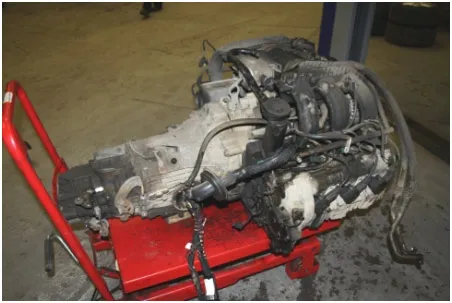
Once satisfied, we remove the engine and gearbox as one unit, then remove the ancillaries, which are stored on pallets in our internal storage facility.
Engine and gearbox out as one unit. Strip and assess
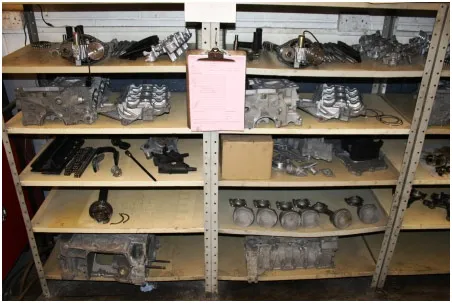
The long motor is transferred to the engine team, who strip and fully assess it. One stripped engine takes up two bays of racking; the strip-down room can hold seven.
One engine, stripped, takes two bays of racking. Essential repair and options
An internal meeting establishes the essential repair: the minimum work needed to return the engine to a serviceable condition, covering the initial fault and anything needing imminent attention. We then look at the other weak spots and identify optional work to strengthen the engine, typically a new intermediate shaft bearing, cylinder strengthening, new crank bearings, timing chains, cylinder head overhauls and pistons, and anything easier to address with the engine out that will reduce long-term running costs.
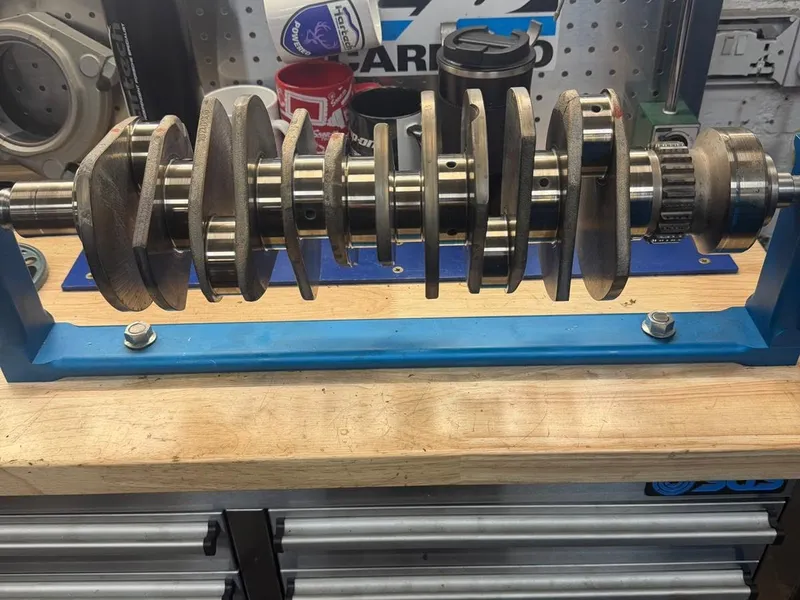
Crankshaft and bearings laid out for measuring. Pricing and the conversation
We price the options on a spreadsheet and speak to you about what we have found and how to proceed. We can explain the engine at whatever technical level suits you, so that owners with no mechanical knowledge can still make an informed decision for their budget and plans for the car.
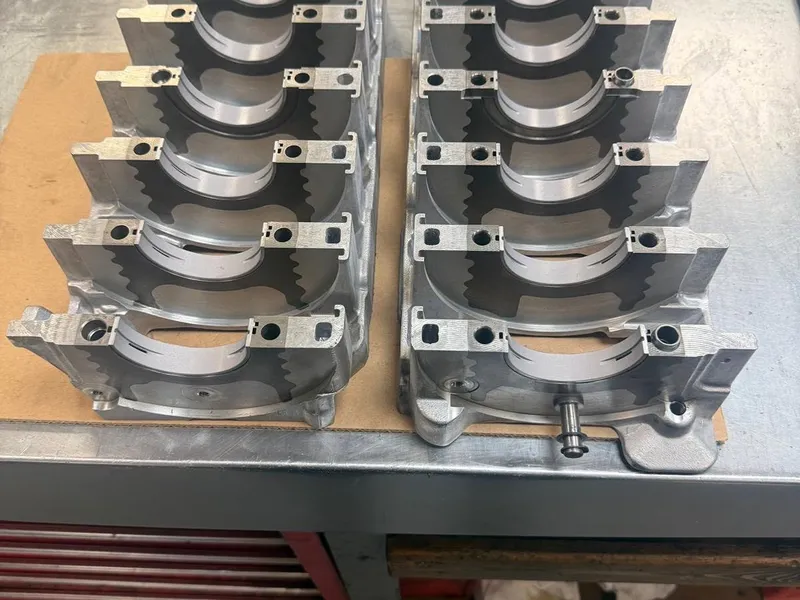
Rod caps kept in order. Cleaning and machining
Components go through three separate cleaning processes, including water blasting, and any necessary reworking in our precision in-house machine shop: four mills including 3-axis CNC, two lathes, a diamond skimmer and a diamond multi-axis honing machine.
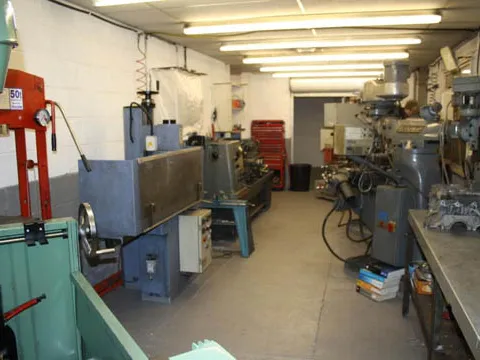
The machine shop: four mills including 3-axis CNC, two lathes, diamond skimmer and multi-axis honing machine. Assembly in the clean room
The engine is reassembled in one of two plastic-lined clean rooms, deliberately away from the main workshop and engineering areas to avoid the dirt, metal cuttings, noise and distraction of a typical workshop.
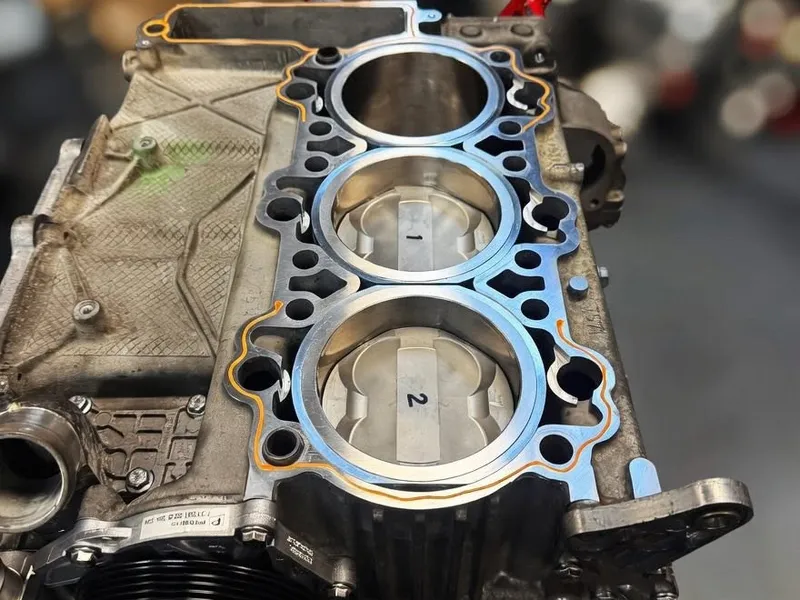
Head gasket on, ready for the cylinder head. Refit and test
The assembled long motor goes back to the workshop, where the ancillaries are checked and refitted and the engine and gearbox assembly is fitted to the car. Once running, a thorough test programme follows with at least five test drives and subsequent checks. Each stage of the work is documented to create a 12-page internal record.
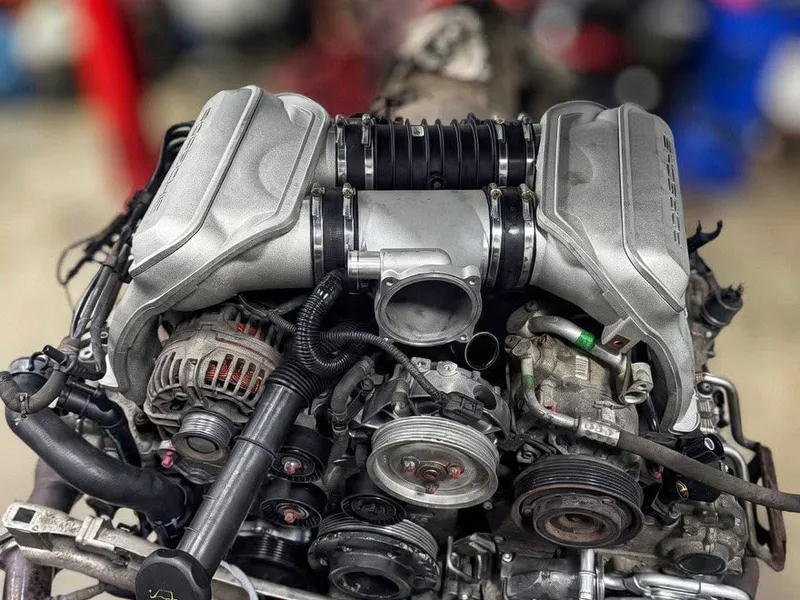
A rebuilt engine ready to go back into the car.
After the rebuild
The oil filter is changed after the first 50 to 100 miles; for cars we fit the engine to, that is done before you collect. A running-in period of around 100 hours, typically 2,000 to 3,000 miles, follows, and we will talk you through it. Once complete, the engine moves to Millers Nanodrive CFS 10w50 NT+ oil.
Parts and labour are guaranteed for 24 months or 24,000 miles. The full terms set out what is covered and the running-in guidance.
Many rebuild customers then join the Lifetime Maintenance Plan, which spreads future servicing, the annual MOT and most repair labour into a monthly payment.
Start with an assessment
Ring or write with what the car is doing. If it sounds like an internal fault we book a first assessment, and nothing is stripped until that confirms it.
01204 302 809
Option 1 for engines, option 2 for servicing and the workshop
- Open
- Mon–Thu 07:15–17:45
- Closed
- Fri, Sat, Sun, bank holidays
- Drop-off
- Before 17:00; locking up starts 16:45
- Address
- Firwood Industrial Estate, Off Thicketford Road, Bolton BL2 3TR